
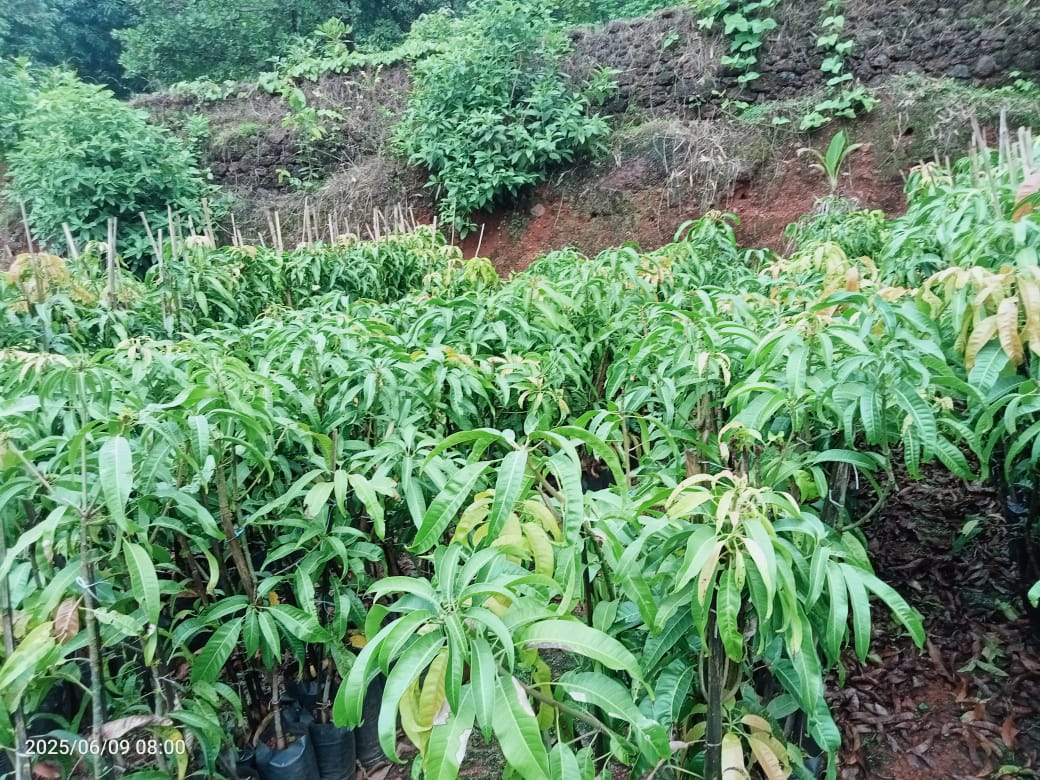
There is nothing quite like the anticipation of harvesting your own Alphonso mangoes. The distinct aroma that travels through the summer air, the rich golden-saffron color, and the unmatched sweet, buttery flavor—it truly deserves its title as the “King of Fruits.”
However, a grand harvest tomorrow depends entirely on the choice you make today. Walking into a nursery or browsing online can be overwhelming. With thousands of saplings available, how do you distinguish a high-yielding, premium plant from a weak one?
Choosing the wrong sapling can mean waiting 5 to 10 years only to end up with sour, fibrous fruit, or worse, a tree that refuses to grow.
To prevent that heartbreak, follow this definitive checklist to choose the absolute best Alphonso mango sapling for your farm or backyard.
1. The Golden Rule: Always Choose Grafted Over Seedlings
If you remember only one piece of advice from this guide, let it be this: Never buy a seed-grown mango sapling if your goal is quality fruit. Always look for a scientifically grafted plant (such as a stone graft or wedge graft).
Here is why this distinction determines your ultimate success:
-
The Fruit Quality Guarantee: Mango seeds undergo cross-pollination, meaning a seedling will rarely inherit the exact traits of the parent tree. Grafting ensures a 100% genetic replica. The scion (top part) taken from a certified, heavy-fruiting mother tree ensures your future mangoes will have that signature, authentic Alphonso taste and aroma.
-
Time to Harvest: A seedling requires a painful 8 to 12 years to produce its first crop. A high-quality grafted sapling skips the long childhood phase and begins flowering in just 2 to 3 years.
2. Inspect the Graft Union (The Connection Point)
The strength of a grafted Alphonso tree lies entirely at the point where the rootstock meets the premium Alphonso scion. This is called the graft union, visible as a distinct bump or “V” shape on the lower part of the main stem.
When evaluating a sapling, look closely at this joint:
-
The Good: The union should look completely healed, tight, and seamless. The bark should be continuous without any weeping sap or deep cracks.
-
The Bad: Avoid plants where the plastic grafting tape is deeply cutting into the bark (strangulation), or where the joint looks loose, dry, or partially split. A weak joint can easily snap under heavy winds or the weight of future fruit.
3. Analyze the Stem and Overall Structure
A tall plant isn’t necessarily a healthy plant. In fact, thin, tall, and lanky saplings are often weak because they have been forced to compete for sunlight in overcrowded environments.
Instead, look for these physical traits:
-
Stem Thickness: Choose a sapling with a thick, woody, and sturdy main stem (ideally about the thickness of a pencil or your thumb for older saplings). This indicates a mature, well-nourished root system.
-
Branching: Look for a plant that shows healthy canopy distribution or early signs of side branching rather than a single, never-ending vertical shoot. A compact, bushy structure creates a stronger tree framework.
4. Decode the Health of the Foliage (Leaves)
Leaves are the mirror of a plant’s internal health. They tell you instantly if the sapling is fighting off diseases or suffering from nutrient deficiencies.
-
Color Check: The mature leaves should be a deep, vibrant, glossy green. While fresh new growth is naturally copper or light pinkish-brown, avoid plants where mature leaves look pale yellow (a sign of nitrogen deficiency or root stress).
-
Pest and Disease Check: Run your fingers along the undersides of the leaves. Reject plants showing white powdery residue (Powdery Mildew), black spots (Anthracnose), or webs and tiny insects (thrips or mites). Bringing a diseased plant home can infect your entire garden.
5. Check the Root System and Container Size
The engine of your Alphonso tree lives underground. A restricted, poorly developed root system will permanently stunt the tree’s growth.
-
The Balance: The nursery bag or pot should be proportional to the size of the plant. A large 3-foot sapling crammed into a tiny 4-inch plastic bag is highly likely to be root-bound (where the roots circle tightly around the bag, choking themselves).
-
Root Health: Look at the drainage holes at the bottom of the bag. A few fine white root tips peeking out is normal and shows active growth. However, if thick, woody roots are bursting out and circling the base externally, the plant has been sitting in that container for far too long.
Summary Checklist for Smart Buyers
Before tapping your card or clicking “Order,” run through this rapid checklist:
| What to Check | Ideal Choice | What to Avoid |
| Propagation Method | Certified Grafted | Seed-grown Sapling |
| Graft Joint | Seamless, fully healed | Cracked, loose, or weeping |
| Stem Shape | Thick, sturdy, straight | Thin, lanky, bent |
| Leaves | Deep green, clean | Yellow, spotted, pest-ridden |
| Container Condition | Balanced space, moist soil |
Root-bound, bone dry |
Conclusion: Your Legacy Starts with One Perfect Choice
A mango tree is not a temporary houseplant; it is a permanent addition to your land, a beautiful shade giver, and a provider of delicious fruit that will delight your family for decades. Spending an extra few minutes inspecting your sapling ensures that the years you invest in watering, fertilizing, and caring for your tree yield the royal rewards you deserve.
👉 Looking for an authentic start? We specialize in raising top-tier, certified grafted Alphonso saplings raised from healthy, high-yielding mother trees. Browse our selection today and bring home the true king of fruits!
Contact us for plant order: 9867937456
Frequently Asked Questions (FAQs)
Q1: What is the ideal age of a grafted Alphonso sapling at the time of purchase?
A: The sweet spot is a sapling that is between 12 to 24 months old. At this stage, the graft union is fully stabilized, the root system is robust enough to handle the stress of changing locations, but it hasn’t become root-bound in its nursery container yet.
Q2: Should I buy a mango sapling that already has flowers on it at the nursery?
A: It looks tempting, but no. Young saplings often flower early due to stress. If you buy a plant with flowers or tiny fruits, you should pinch them off immediately after planting. Allowing a young sapling to bear fruit diverts all its energy away from establishing roots, which can permanently weaken or stunt the tree.
Q3: Can I choose a dwarf Alphonso sapling for container gardening?
A: While there is no true natural “dwarf” Alphonso, plants grafted onto specific rootstocks (like Olour or Vellaikulamban) tend to have a naturally restricted, slower growth habit. Always ask your nursery provider if their grafts are suitable for long-term container growth if you plan to plant it on a terrace.